
Understanding media: How to tell what's real and what's not
Videos, ads, news, YouTube, games - not all of it is true. Learn three simple skills to tell what's real and stay in control of what you believe.
Kids see information everywhere. Videos, ads, news, YouTube, games, posters, and even things friends say at school. Some of it is true. Some of it is stretched or made to sound bigger than it really is. Some of it is trying to sell something. Some of it is just silly.
Learning media literacy means learning how to tell the difference. It is like having a pair of smart glasses that help you see what is real.
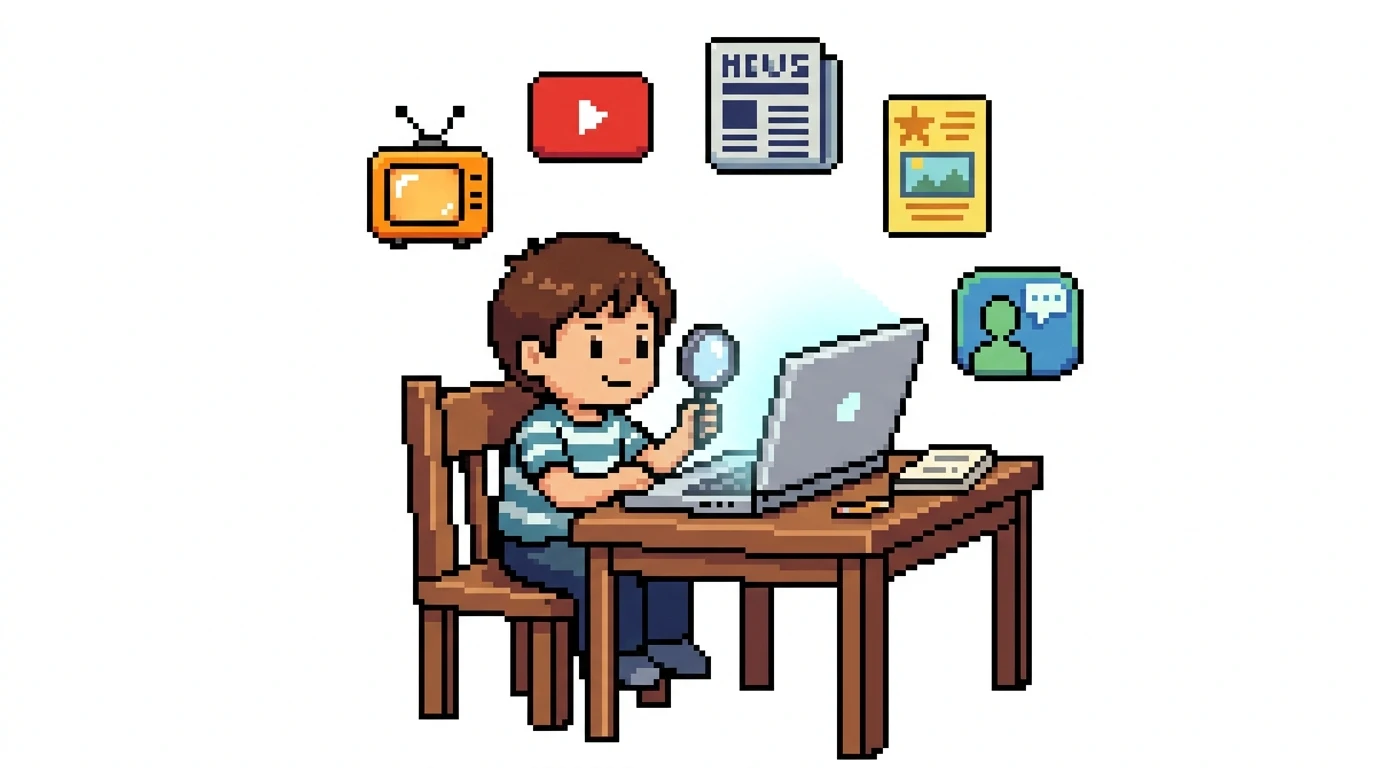
What media is
Media is anything that shares information with lots of people. It can be:
- TV shows
- YouTube videos
- Ads
- News
- Magazines
- Websites
- Posters
Media is everywhere, and it does not always tell the full story. That is why learning how to understand it is important.
Three media skills every kid can learn
1. Spot the purpose
Everything you see has a reason behind it. Some things want to teach you. Some want to entertain you. Some want you to buy something. Some want you to click a button.
Ask yourself: "What is this trying to make me think or do?"
2. Look for clues
Media often uses tricks to get your attention. Bright colours. Big words. Funny faces. Exciting music. Titles that sound dramatic. These clues help you understand what the creator wants.
3. Check the facts
If something sounds strange or too amazing, pause and check. Ask a trusted adult. Look for another source. See if the information matches. This helps you stay smart and safe.
Real examples kids understand
A YouTube video says "This toy is the best ever!"
Purpose: Sell the toy.
Clues: Excited voice, bright colours, fast talking.
Check: Ask someone who owns it or look for reviews.
A friend says "Everyone is talking about this!"
Purpose: Make it sound important.
Clues: Big statement with no proof.
Check: Ask others or look it up.
A news headline says "Amazing discovery!"
Purpose: Make you click.
Clues: Dramatic words designed to grab attention.
Check: Read the full story, not just the headline.
Fun activities to practise media skills
The "What's the purpose?" game
Look at ads, posters, or videos and ask: "What is this trying to make me do?"
Spot the tricks
Watch a short video and list all the tricks used to grab attention. Music, colours, jokes, fast talking, big text.
True or trick?
Say a statement and let your child guess if it sounds true or like a trick.
"This snack makes you run faster."
"This toy will change your life."
"This game is fun for some people."
People skills that help with media literacy
- Asking good questions: "Who made this? Why did they make it? What do they want me to think?"
- Thinking before reacting: Pausing helps you avoid being pulled in by dramatic headlines or big claims.
- Talking to trusted adults: Kids should know they can always ask a parent or teacher if something seems confusing.
A simple takeaway for kids
Media is not bad. It is just powerful. When you learn how to understand it, you become the one in control.
The takeaway
You get to decide what you believe. You get to decide what matters. You get to decide what is true.
Spot the purpose. Look for the clues. Check the facts.
Keep exploring
More guides on staying smart, thoughtful, and safe online.
Spotting misinformation and checking your sources
Not everything you read, watch or get sent is true. Put on your detective hat and learn four questions that help you work out what to trust.
Privacy, passwords and your digital footprint
Everything you do online leaves a trail. Learn how to protect your private information, build passwords that are strong and easy to…
How algorithms shape what you see online
Ever wondered why your videos, games and posts seem to know what you like? A hidden set of rules is choosing for you. Learn how it works,…
Using AI tools well and honestly: A guide for curious kids and teens
AI can explain, brainstorm and help you practise, but it can also be wrong, and it can tempt you to cut corners. Learn how to use it as a…
Stranger danger on the internet: Staying safe online
Not everyone online is who they say they are. Learn the signs of unsafe strangers, what to do when something feels wrong, and why telling…