
Spotting misinformation and checking your sources
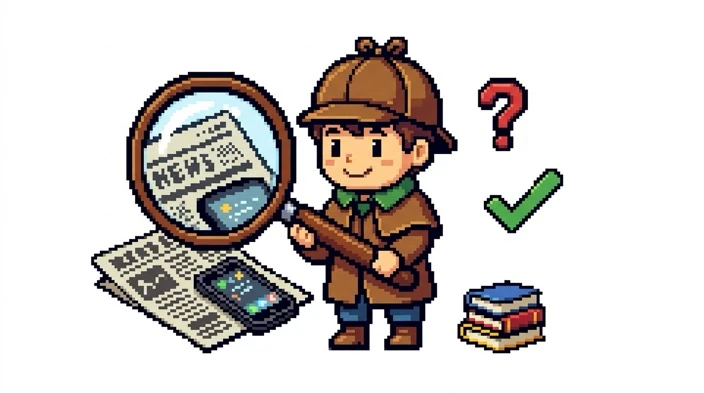
Not everything you read, watch or get sent is true. Put on your detective hat and learn four questions that help you work out what to trust.
Your cousin sends a message: "Share this with ten people or something terrible will happen!" A video claims a famous scientist said something shocking. A photo of an animal that looks too amazing to be real is going round the school.
Some of these things are true. Many are not. Good detectives do not just believe or just doubt. They check.
Three kinds of "wrong"
Not every false thing is a lie. Knowing the difference helps you stay calm and kind when you spot one.
| Kind | What it means | Example |
|---|---|---|
| Mistake | Someone shares something wrong, but by accident. | A person repeats a fact they remembered incorrectly. |
| Misinformation | False or misleading information, shared without meaning to harm. | A friend forwards a health tip that is not true because they thought it was helpful. |
| Disinformation | False information made or shared on purpose to trick or influence people. | A made-up story designed to get clicks, or to make people angry. |
The detective's four questions
Next time something makes you stop and think, work through these questions in order:
1. Pause: how does this make me feel?
Misleading posts are often designed to make you feel shocked, scared or angry so that you will share before thinking. If your heart jumps, that is your cue to slow down.
2. Who made this, and why?
Look for a name, a website or an organisation. Do they explain who they are? Are they trying to teach, to sell something, to entertain or to change your mind? If you cannot find who is behind it, be extra careful.
3. Can I find it somewhere else?
Search for the main claim. If it is true and important, trusted sources such as well-known news organisations, libraries, museums, universities and government sites will usually be talking about it too. If only one strange page says so, that is a clue.
4. Is the picture, quote or date real?
Photos can be old, edited, made by AI or used with a different story. A quote may be made up. Try a search by image to see where a picture first appeared, and check the date to see whether it is current.
Pocket checklist
- Pause.
- Who made it?
- Where else is it reported?
- Is the proof real and recent?
Still not sure? Ask a trusted adult, teacher or librarian.
Six red flags to watch for
Spotting one of these does not prove something is false, but it is a good reason to check:
Shouting headlines
ALL CAPITALS, lots of exclamation marks, or words like "SHOCKING" and "You will not believe this".
Pressure to share
"Send this to ten friends" or "Share before it is deleted". Real information does not need chain letters.
No source
"Scientists say" or "Experts agree" without naming who, or a link you can check.
Too good, or too scary, to be true
Miracle cures, instant riches, or claims that something terrible is about to happen.
Missing date or old date
Old stories get shared again as if they were brand new.
Only one side
Real life is rarely black and white. Be careful with posts that make everyone else look foolish or evil.
Who can you trust?
No source is perfect, but some are much more careful than others. Look for places that:
- Name their authors and explain who they are.
- Show their evidence and tell you where they got it.
- Correct mistakes openly when they get something wrong.
- Are checked by others, like school books, libraries, museums and reputable news organisations.
A simple habit is to check two or three different, independent sources. If they all agree, you can feel much more confident.
Detective practice: what would you do?
Think about what you would do first, then click to compare:
A friend sends a video of a "new law" that sounds unbelievable. What do you do?
You see an amazing photo of an animal that looks too perfect. How can you check?
A website says a famous person said something shocking, but gives no source. What now?
You shared a post, then found out it was false. What should you do?
A post makes you really angry. Why is that worth noticing?
The big takeaway
Checking before you believe or share is a superpower anyone can build. When you find something false, you do not need to tease the person who shared it - they probably believed it too.
Be a kind detective
Say: "I looked into this and found something different. Want to see?"
Check first. Share second. Be kind always.
Keep exploring
More guides on staying smart, thoughtful, and safe online.
Privacy, passwords and your digital footprint
Everything you do online leaves a trail. Learn how to protect your private information, build passwords that are strong and easy to…

How algorithms shape what you see online
Ever wondered why your videos, games and posts seem to know what you like? A hidden set of rules is choosing for you. Learn how it works,…

Using AI tools well and honestly: A guide for curious kids and teens
AI can explain, brainstorm and help you practise, but it can also be wrong, and it can tempt you to cut corners. Learn how to use it as a…
Stranger danger on the internet: Staying safe online
Not everyone online is who they say they are. Learn the signs of unsafe strangers, what to do when something feels wrong, and why telling…
Understanding media: How to tell what's real and what's not
Videos, ads, news, YouTube, games - not all of it is true. Learn three simple skills to tell what's real and stay in control of what you…