
Credit cards, BNPL and debt: how interest works
Borrowing money is never free. Credit cards, buy now pay later and loans all charge a price for waiting to pay. Here is how interest really works, and how to stay on the right side of it.
Imagine lending your favourite book to a friend, and they ask to keep it for a year. You might say yes, but you would probably want something in return. Banks think the same way when they lend money. Interest is the fee you pay for using someone else's money.
Interest can be a helpful tool when you understand it, and a heavy weight when you do not. Let's unpack how it works, so that when the day comes to borrow, you are the one in control.
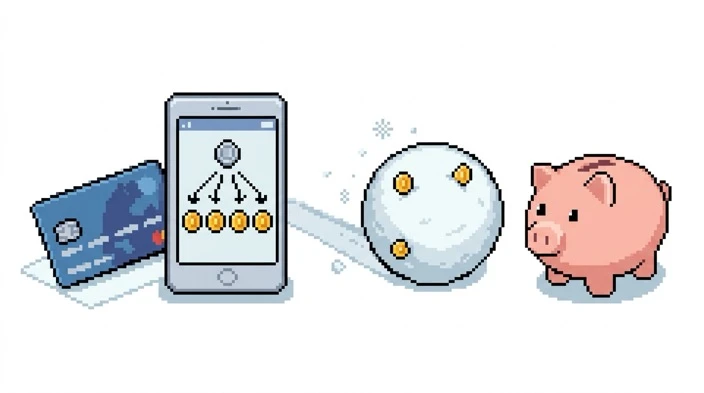
What is interest, really?
When you borrow money, you pay back the original amount (called the principal) plus extra on top. That extra is interest, usually shown as a percentage per year.
For example, borrowing $1,000 at 10% interest for one year means you owe $1,100 if you pay it all back at the end. Simple enough. The tricky part is what happens when you do not pay it back quickly.
Simple vs compound interest
Simple interest is charged only on the original amount you borrowed.
Compound interest is charged on the original amount and on interest that has already been added. It is like a snowball: as it rolls, it picks up more snow, and it grows faster and faster.
Compound interest is wonderful when it works for you in savings, and costly when it works against you in debt.
How credit cards work
A credit card lets you spend the bank's money now and pay it back later. Each month you receive a statement showing what you owe. You then have a choice:
- Pay the full balance by the due date, and in most cases you pay no interest on purchases.
- Pay only part of it, and interest is charged on what remains, often at a rate around 15% to 22% a year.
- Pay only the minimum, and the debt can hang around for years.
| Spending on a card | Repayment approach | What happens |
|---|---|---|
| $1,000 purchase | Paid in full by the due date | No interest on the purchase. The card worked like a short, free loan. |
| $1,000 purchase | Only the minimum each month | Interest keeps being added to what is left. It can take several years to clear, and you may pay hundreds of dollars extra. |
| Cash advance | Any | Interest usually starts straight away, at a higher rate, with no interest-free period. |
The minimum payment trap
The minimum payment looks friendly because it is small. But it is mostly interest, so the amount you owe barely shrinks. The card company is happy to let you pay slowly, because slow payment earns them more interest.
Tip: If you cannot pay the full amount, pay as much above the minimum as you can.
Buy now, pay later (BNPL)
Buy now, pay later services let you split a purchase into smaller payments, often four instalments over several weeks. Many advertise "no interest", and that can be true. But that does not mean there is no cost.
- Late fees can be charged if you miss a payment, and they can add up quickly.
- Several small plans at once can be hard to keep track of, even if each one feels tiny.
- It makes spending feel painless. Paying $25 four times feels lighter than paying $100 once, yet it is the same $100.
BNPL is still debt. Before using it, ask yourself: would I buy this if I had to pay for it all today?
How debt grows, and how to tame it
Not all debt is the same. Borrowing to learn a skill, or for a reliable way to get to work, may be a sensible decision. Borrowing for something that loses value fast, or that you simply want right now, deserves more thought.
If you ever do owe money, these habits help:
Pay the highest interest first
List everything you owe and the interest rate on each. Pay the minimum on all of them, then put every spare dollar towards the one with the highest rate. This saves the most money over time.
Read the fine print
Before agreeing to any credit, check the interest rate, annual fees, late fees, and what happens if you miss a payment. If something is unclear, ask a trusted adult, and remember that it is always fine to say "let me think about it."
Ask for help early
If repayments become hard, speak up sooner rather than later. A trusted adult can help, and free, confidential support is available in Australia through the National Debt Helpline on 1800 007 007 or at ndh.org.au.
Borrowing words to know
A few key terms make the fine print much less scary:
Principal
The original amount of money you borrowed, before any interest or fees are added.
Interest rate
The percentage charged for borrowing, usually shown per year.
Compound interest
Interest charged on both the original amount and the interest already added, which makes debt grow faster over time.
Minimum payment
The smallest amount you must pay each month to stay in good standing. Paying only this keeps you in debt for longer.
Credit score
A number that shows lenders how reliably you have repaid money in the past. Paying on time helps it, and missed payments can hurt it.
Instalment
One of several smaller payments that together make up the full price, as used in buy now, pay later plans.
Test your instincts: Borrowing dilemmas
Read each situation, decide what you would do, then click to check:
A shop offers "4 easy payments of $30" on a jacket. Is it really cheaper than paying $120 today?
Your credit card bill is $500, and the minimum payment is $25. You have $500 in savings. What is the smartest move?
Why can a $1,000 card debt turn into much more than $1,000?
A friend has three different BNPL plans running at once and has lost track of the dates. What should they do?
So, should you use a credit card?
Our honest recommendation: a credit card is a tool that suits some people and not others, and the difference is mostly about you, not the card. If you are young, or still building your habits, the safest default is to wait, or to start very carefully. Here is why.
Why a credit card can be dangerous
- It hides the cost. Tapping a card feels very different from handing over cash, so it is easy to spend more than you planned.
- It rewards impatience. You get the thing today, and the bill arrives later, when the excitement has faded.
- Interest snowballs. One missed full payment can start a cycle of 15% to 22% interest that is hard to climb out of.
- Rewards can mislead. Points and perks rarely outweigh the interest you pay if you carry a balance.
When a credit card can work well
- You only spend money you already have, and pay the full balance every month.
- You use it for planned, ordinary spending, such as bills or groceries, and track it in a budget.
- You have set up automatic full repayments, so you cannot forget.
- You use it to build a good credit history, or for the extra protection it can offer on purchases.
Used this way, it behaves like a convenient, short and free loan. The moment you start carrying a balance, that changes.
It comes down to willpower and delaying gratification
Credit cards are really a test of self-control. The skill that matters most is being able to say, "I want it now, but I can wait."
Psychologists have long found that people who can delay a reward tend to make steadier choices with money. The good news is that this is a habit, not a fixed trait, and you can practise it:
- Use a 24-hour rule: wait a day before any non-essential purchase.
- Save up first for things you want, and enjoy the anticipation.
- Be honest with yourself. If you often buy on impulse, a debit card or cash is the safer choice.
A simple test: if you could not pay for this purchase from your bank account today, do not put it on a card.
The takeaway
Borrowing is a tool, not a free gift. When you understand how interest works, you can choose when it is worth using, and avoid the snowball that rolls over people who never saw it coming.
Your borrowing checklist
- I know interest is the price of borrowing, and that compound interest makes debt grow faster.
- I pay credit card balances in full whenever I can.
- I treat buy now, pay later as real debt, with late fees and all.
- I read the fine print before agreeing to any credit.
- I ask a trusted adult for help early if repayments feel hard.
Borrow with care, pay with a plan, and keep your future self in mind.
More Guides in Finance & Money
Explore foundational guides on money buckets, savings habits, and practical life skills.
Scams and fraud: how to spot them
Scammers are clever, patient and good at pressure. The good news is that their tricks follow a pattern. Learn the warning signs and you can…
Buying a car: Running costs, insurance, and avoiding finance traps
Buying your first car feels like stepping into pure freedom. But the purchase price is only the beginning. Here is how ongoing running…
Needs vs wants: How advertising shapes what we spend
We all need food, shelter, and warm clothes. But advertisements are cleverly designed to make us feel like toys, games, and brand-name…
How tax brackets work: The money bucket secret (Year 6 guide)
Have you ever heard someone say: "If I earn more money, tax will take it all away!"? Here is why that is a total myth - using the magic…