
Understanding people: The invisible backpack and the skill of empathy
Most people never get taught how empathy actually works. Once you learn to look for the quiet clues, understanding what someone else is going through becomes second nature.
Have you ever had a moment at school where a friend suddenly snapped at you, or walked past without saying hello, and you wondered, "What did I do wrong?"
It is one of the most uncomfortable feelings in the world. But most of the time, the way someone reacts has almost nothing to do with you. There is a simple way of looking at people that changes how you see almost every conversation, disagreement, and friendship.
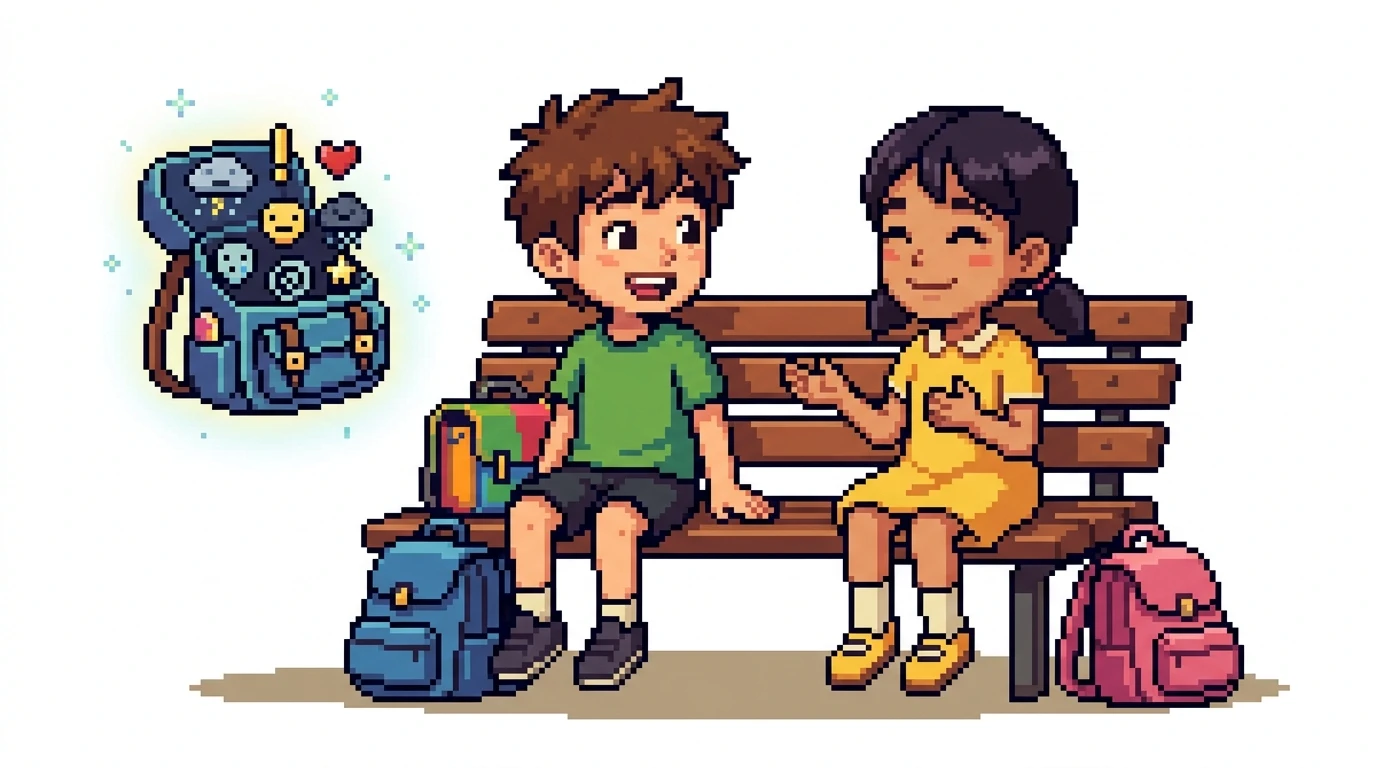
1. Everyone carries an invisible backpack
Imagine that every person you pass in the corridor-your classmates, your teacher, your brother or sister, even someone who cuts in front of you in the canteen line-is wearing an invisible backpack.
You cannot see what is inside, but they have been carrying it around all morning. Inside that backpack might be:
- Worries: Being nervous about a math test, an upcoming oral presentation, or getting picked last for soccer.
- Events from home: Rushing out the door without breakfast, a disagreement with a sibling, or a sick pet.
- Feelings: Feeling left out yesterday, feeling tired from bad sleep, or feeling shy in a crowded room.
When someone is grumpy, snappy, or unusually quiet, they are usually reacting to whatever is sitting heavy in their backpack. When you understand this, you do not need to feel hurt or react with anger. You can stay calm, because you realise their mood is about their day, not about you.
2. The three quiet skills of empathy
Empathy is not a mysterious talent that you either have or do not have. It is simply a practical skill you get better at every time you use it. It comes down to three clear steps:
Step 1: Notice the quiet clues
People rarely announce what they are feeling out loud. Instead, their body language gives them away. Notice if someone has slumped shoulders, a quiet voice, or is looking down at their shoes. These are little clues about what might be inside their backpack.
Step 2: Step into their shoes for ten seconds
Ask yourself: "If I had just failed a quiz or had no one to sit with at lunch, how would I feel right now?" You do not have to agree with how they are acting. You are simply trying to understand the reason behind it.
Step 3: Choose a thoughtful response
You do not need to make a big speech or solve their problem. A small gesture is often enough-asking a simple question, giving someone room to cool down, or offering a kind word. Small gestures have a surprisingly big impact.
3. What this looks like on an ordinary day
Here are three everyday moments at school where this completely changes what happens next:
When a friend snaps at you during a game
First impulse: "Why are you being so mean? I'm not playing with you."
The empathy shift: You notice they missed breakfast or got told off in class earlier. Their backpack is overflowing.
A helpful response: "Are you doing okay? You seem a bit stressed today."
When someone is standing on the edge of the playground
First impulse: Keep playing with your own group and ignore them.
The empathy shift: You see them hovering quietly near the handball courts, unsure how to ask to join.
A helpful response: "Hey, do you want to jump in on the next round?"
When a classmate makes an embarrassing mistake
First impulse: Laugh along with the rest of the room.
The empathy shift: You notice their face turning red and their shoulders tensing up.
A helpful response: Catch their eye with a friendly smile, or say quietly, "Don't stress, I made that exact same mistake last week."
4. Everyday habits that make friendships easier
Understanding people is like training a muscle. Here are four practical habits you can try out anytime:
- Play "clue finder" when you are out: When you are waiting for the bus or sitting in a café, quietly notice the people around you. Is someone walking briskly because they are running late? Is someone sitting calmly reading a book? Spotting these details trains your observation skills.
- Disagree without arguing: When someone has a different opinion about a game, a movie, or a rule, you do not have to say, "You're wrong." Saying "I see it a bit differently" lets you share your thought without starting a fight.
- Give a clean apology: A real apology does not make excuses. It simply sounds like: "I'm sorry about earlier. I didn't mean to upset you." People respect someone who can admit a mistake.
- Notice when someone needs quiet: Sometimes empathy means talking, but just as often, it means giving someone five minutes of quiet space until they feel ready.
5. A simple takeaway to keep with you
Empathy is not about being perfect, and it is not about letting people treat you unfairly. You can be kind and understanding while still having strong boundaries.
It simply means choosing to look past the surface before reacting. When you take just ten seconds to wonder what someone else might be carrying, life gets much simpler, disagreements become easier to solve, and your friendships become much stronger.
The takeaway
You never have to guess everything about someone. You just need to remember that everyone has an inside story.
Pay attention to the quiet clues, imagine their shoes for a moment, and choose a kind response.
Keep exploring
More quiet lessons and practical guides for growing minds.

Why we study: The hallway of doors and the keys you collect
Studying is not about getting 100% on every test. It is about collecting keys so you can choose whatever path you want when you grow up.